

Emma Kidd
Commissioned by Vividus London
CONTENTS
1.Opening Statement
The Importance Of Imagination And Signs We Are Losing It
2.Dwindling Imagination
Why We Might Be Losing Our Faculty Of Imagination
3.Democratic Context
Is Creative Democracy A Good Thing?
4.Core Principles
How Imagination Thrives
5.Imagination Boosters
Take Action Now
6.References
The Manifesto’s Inputs
The Plain Sense Of Things
BY WALLACE STEVENS
After the leaves have fallen, we return
To a plain sense of things. It is as if
We had come to an end of the imagination,
Inanimate in an inert savoir.
It is difficult even to choose the adjective
For this blank cold, this sadness without cause.
The great structure has become a minor house.
No turban walks across the lessened floors.
The greenhouse never so badly needed paint.
The chimney is fifty years old and slants to one side.
A fantastic effort has failed, a repetition
In a repetitiousness of men and flies.
Yet the absence of the imagination had
Itself to be imagined. The great pond,
The plain sense of it, without reflections, leaves,
Mud, water like dirty glass, expressing silence
Of a sort, silence of a rat come out to see,
The great pond and its waste of the lilies, all this
Had to be imagined as an inevitable knowledge,
Required, as a necessity requires.
OPENING STATEMENT
Imagination moves culture forward and introduces tomorrow’s reality.
Imagination is the power to form new ideas and mental images of things that are not present or real. Cognitively, it’s explained by the brain’s ability to recombine memories and abstract concepts to make something new in the mind’s eye. But culturally, imagination is often understood as a connection to the divine.
Two philosophers who laid the foundations of Western thought could scarcely have disagreed more about the value of imagination. Where Plato saw a trumped-up trifle distracting us from reality, Aristotle considered it to be foundational to all knowledge. This conflict lives on.
It’s the critical importance of imagination that forms the basis of this manifesto, provoked by the concern that we are in danger of losing it. (And people might not be worried because, trumped-up trifle).
Language expresses a culture’s values and ‘airy-fairy’ is a synonym for ‘imaginative’. Make of that what you will. *Roget’s Thesaurus
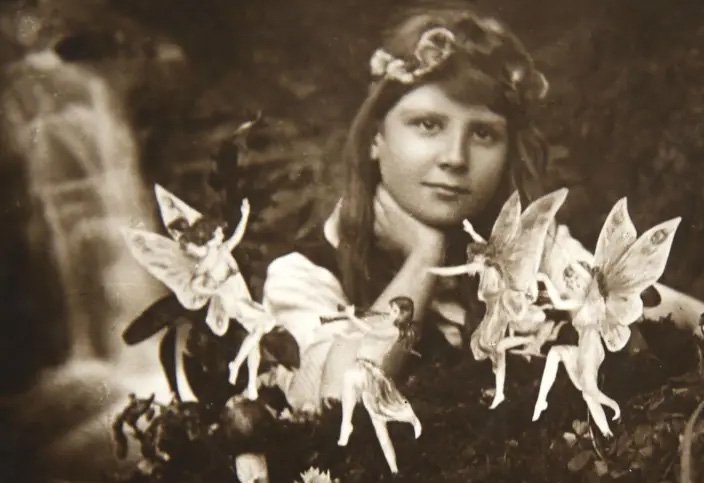
Cottingley Fairies, Elsie Wright & Frances Grifiths 1917 - 1920
“To pay attention to culture today is to be belted into some glacially slow Ferris wheel, cycling through remakes and pastiches with nowhere to go but around. The suspicion gnaws at me (does it gnaw at you?) that we live in a time and place whose culture seems likely to be forgotten.”
Jason Farago, New York Times.
It seems we live in an age of ever diminishing imagination – reflected most keenly in today’s creative outputs. Will we get stuck here?
Worrying at this critical juncture. We face ecological disaster, technological disruption and profound social change. We need new, visionary ideas precisely at a time when we seem unable to imagine them.
DWINDLING IMAGINATION
Why Is Our Imaginative Power Dwindling?
1.Imagination Is Inconvenient And Convenience Is King...
Today, creative endeavours begin and end with our digital devices. It is much more convenient to dive into that imagination-limiting sea of sameness throughout the creative process, and AI exacerbates this. It removes the blank page and much of the uncertainty surrounding a nascent idea, and along with it, it removes the need to stretch our imaginations. Rare is the creative who can escape the digital lure entirely. And if they have no digital presence, we ask, do they even exist?
2.Imagination Needs White Space Not White Noise...
All previous centuries were alike in their time for the unoccupied mind. Boredom. Waiting for things. This was our time for mind wandering. Dreaming. Problem solving. All of it, strength-training for our imaginations - and we were jacked on ideas. Today, any whiff of boredom and our devices are out, minds occupied by Endless Scroll. The removal of this boring white space has rendered our imaginative muscle as weak as wet paper.
3.We Have Made Our Imagination Worthless...
Such is the ease of creative (re)production, we have made the efforts of our imagination near worthless. Fashion, image, music, prose – all commodified to be used up and thrown away. And with this shift, the intrinsic human motivation for creation is lost too. Who would aspire to make worthless art? But the extrinsic motivation of money remains. So we start to create for the market rather than from imagination.
4.Imagination Slows Productivity...
In the race for growth, modern business needs to deliver the end product as fast as possible. This means minimising the creative process it takes to get there, or removing it altogether. Consequently, creatives work backwards from the end result, compelled to over-index for things that are immediately understandable and relatable. Imagination as solution. This is the most direct route to market, and that route is invariably the well-trodden one.
5.Imagination Is An Acquired Taste...
Taste is being hailed as one of the last bastions of human ownership, with machines unable to separate the metaphorical wheat from chaff. But are our tastes less diverse than they once were? And has over-whelming abundance de-sensitized our palettes? Psychological studies show that humans harbour an implicit bias against genuine imagination because novelty introduces ambiguity and risk, leading decision-makers to quietly prefer the comfortable safety of the familiar.
6.Imagination Dies In Ultra Processed Culture...
It is not much of a stretch to see that the culture behind Ultra Processed Food is an Ultra Processed People. Content (that word!) is packaged up in easy to consume bytes, filling us with sugary-rushes and ideas without substance. A product of what’s out there, we absorb it and it becomes us and in this way, we are ultra-processed products of culture too. Depleted landscapes and bodies are reflected in dulled minds and imaginations.
7.Nothing is left to the imagination...

Imagination is fuelled by a sensitivity to subtleties. Yet much of contemporary culture is a blunt instrument. Stories explain themselves. Images show everything. Popular entertainment follows formula. So we get less practice imagining. If imagination is a faculty that strengthens through use, what happens when a society lets so much of it lie fallow? Could it be that the ability to imagine might become exceptional? In the machine age, those sensitive beings who feel and notice most deeply will hold the human advantage.
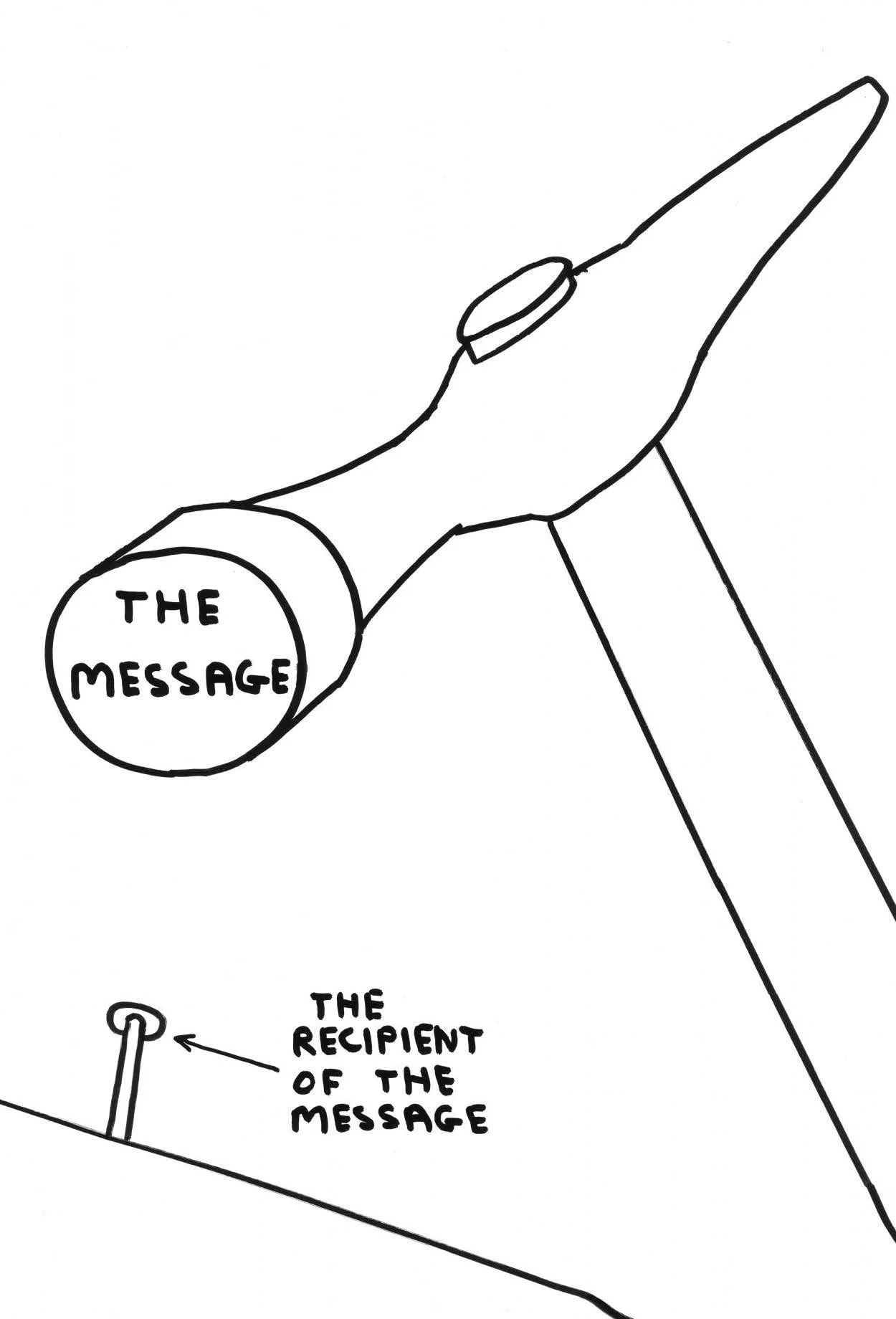
David Shrigley Untitled (The Message) 2014
DEMOCRATIC CONTEXT
Can Our Creative Democracy Expand Our Imagination?
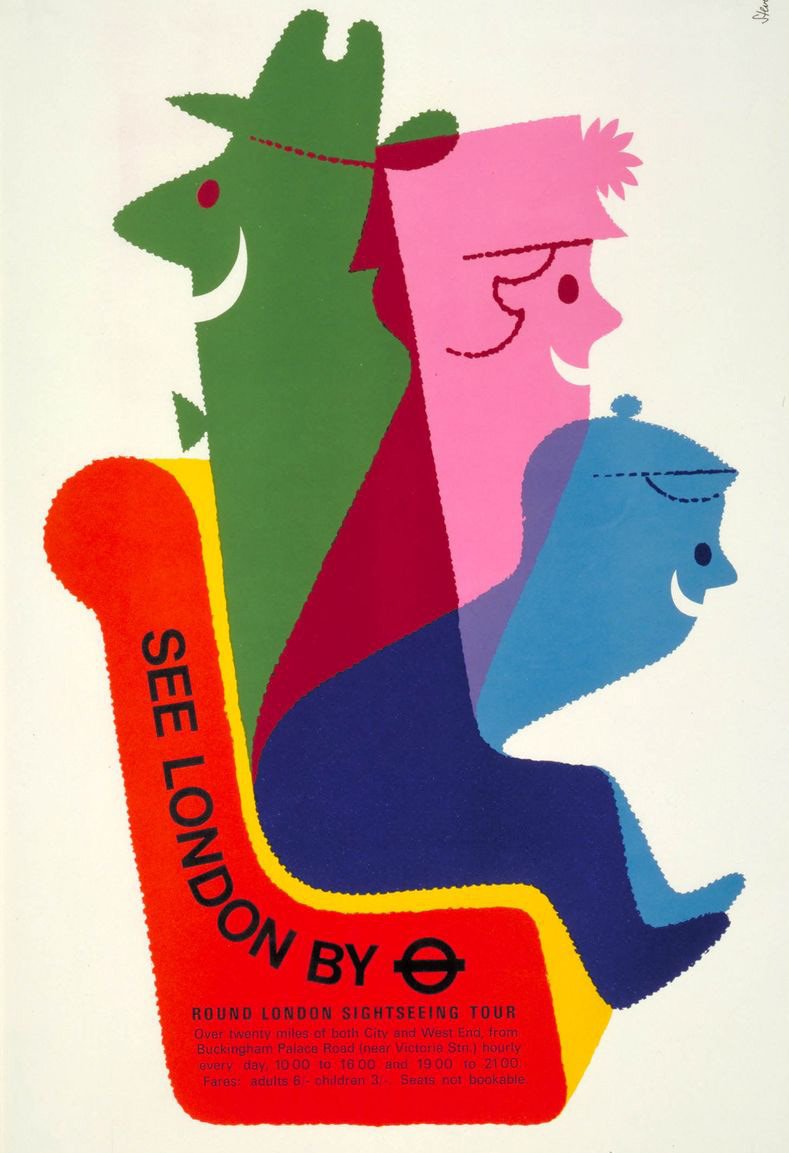
Harry Stevens See London By Public Transport 1970
It’s widely acknowledged that everyone is creative in some way. It’s part of what makes us human. Today, the tools of professional creativity have been democratised, and almost anyone can design an album cover, create a film or build a brand. This paradigm shift has enabled voices to be heard and works to be created that would have been blocked by elitism, prohibitive budgets and years of training.
Advertising is an example of this professional creativity as is the shift in how it is produced. Last century, an advertising team would have spent years honing their crafts — the art of persuasion, composition, language and means of production. The physical processes of printing, painting, drawing and photography brought their own labour-intensive qualities to the work.
Today, digital tools allow us to produce more, faster and more cheaply. The result performs its function perfectly. But are these works worth looking at? And do they add value to our creative culture or just the bottom line?
The trouble is, though our new tools make it easy to produce ‘creative assets’, they don’t expand our imagination at the same time. We simply become better at selecting, remixing and prompting possibilities that the tools already make available.
Every creative tool has an aesthetic grammar. The medium shapes the message. Today’s templates, filters, feeds, algorithms, AI generators and platform formats make some ideas easy to convey, while making others harder. The more we create within the same systems, the more those systems can narrow the spectrum of our ideas and the slim shapes of our imagination.
This creates a troubling paradox. We have more creative output but less imaginative range.
For much of the twentieth century, meanwhile, people encountered the work of skilled practitioners every day. Architecture, fashion, magazines, packaging, cinema, posters and typography placed examples of professional craft into ordinary life. You didn’t have to visit a gallery or study design history to encounter ambitious visual work. You were educated by your environment.
This constant exposure may have raised the collective bar. It gave people an intuitive sense of proportion, composition, elegance and quality. The professional creative was not merely producing content; they were helping to establish the aesthetic standards of the day, and maybe even expanding the imaginative range of everyone who encountered their work.
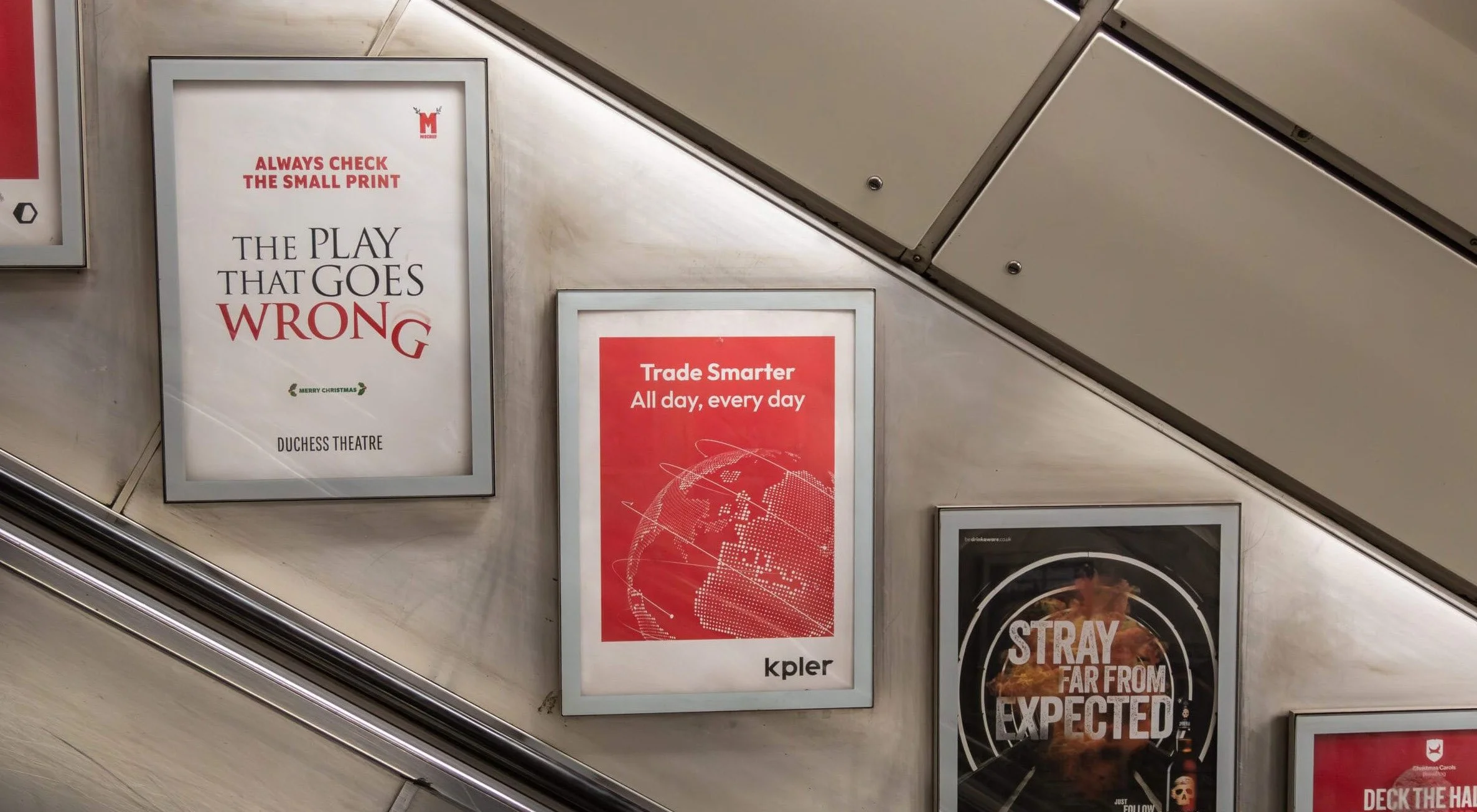
Tube Ads 2026
A culture does not only teach us what is beautiful. It teaches us what is possible. Extraordinary buildings, stories or films give us forms and ideas that we might not have invented ourselves. They increase the reach of what we can conceive.
If that layer of professional craft diminishes, perhaps we lose more than beautiful objects. We may also lose a form of collective aesthetic and imaginative education.
This is the paradox of creative democracy. We may have democratised the means of creative expression at exactly the moment when the cultural environment is becoming less capable of expanding our imagination.
CORE PRINCIPLES
Imagination Is A Muscle
The rise of AI makes thinking for ourselves increasingly unnecessary. If intelligence can be accessed at the touch of a keyboard, why endure the slower, harder process of cultivating it within ourselves? And what happens when we remove the friction through which our distinctive human thoughts develop? Does our thinking become mainstream? We simply don’t yet know how much brain power we might surrender – along with the desire, capacity and confidence to think for ourselves, and dream our own dreams…
We know that we lose half of our synapses by age 14 because we stop using them. This is believed to make the connections in the brain we do use stronger and more efficient. But it could also be that our human brains have much greater capacities than we appreciate. Different functions may have been diminished or lost through the ages of evolution. It is possible that we have the capacity for more than 5 senses for example, and our ways of communication – and with whom or what we communicate – could be much more diverse than we know. It is only when we exercise our brains that they get stronger and more powerful, but it is as much about diversifying our ways of thinking, as it is about doing more of the same. With diversity comes expansion and maybe, the potential for truly unlimited imagination.

Imagination Is An Ecosystem
Industrial agriculture and its high-intensity monocultures is what enabled our modern civilisation to thrive. But it is an extractive relationship: monocultures suffocate diverse species, synthetic chemicals poison the environment, and much of the food we consume contributes to our decline. It is this system that has driven the fast erosion of topsoil and the genetic heritage that has taken four billion years to develop.
A monoculture is the opposite of an ecosystem.
“As the land suffers a violent simplification of its natural complexity and sensitivity, so do we.”
Aurora Solá, Manifesto On The Future Of Food 2025
It should not surprise us that we also inhabit a creative and social monoculture: one shaped by a small concentration of power, conventional forms, extractive rather than regenerative values, and an environment that suppresses growth beyond the mainstream. In the twenty-first century, there is no such thing as subculture.
Over the past century, food has insiduously shifted from something that nourishes us into a commodity—something to be traded, speculated on, and profited from.
The same could be said of our creative culture, along with our bodies and our selves. The creative industry generates enormous profits, yet culture – our means of connecting with one another and making meaning – has become an instrument of impoverishment and separation. Audiences are sold to the highest bidder. Outrage, bigotry and cruelty attract attention because they sell. Yet for precisely this reason, creative culture also holds the power to instigate transformation.
Can we look to the regenerative farming movement and ask how we might apply this approach? What would a regenerative creative ecosystem look like? How might we restore and renew our cultural inheritance that has taken 300,000 years to develop?
If we turned culture into a life-enhancing, spirit-nourishing enterprise rather than an extractive industry, might we alter the trajectory of our future? And could our restored imagination help remake the world?
Imagination Is A Faith
You might say imagination is a faith. Not faith in the narrow sense of believing in a particular god or doctrine, but faith as the willingness to believe that something not yet apparent can nevertheless become real. To imagine is to look at the world as it is and sense, somewhere beyond its visible edges, the possibility of what it might become.
The amazing thing is that this process often happens without our permission. We do not command an idea into existence. We make ourselves available to it. We are conduits as much as creators, drawing on a vast reservoir of memory, experience, perception and possibility that extends beyond conscious thought. Imagination is the meeting point between the individual mind, our ancestry, and the universal creative reality of which we are a part. The idea seems to come from nowhere because the where is too large for us to see.
Every act of meaningful creation begins with the refusal to accept the present as final. Before there is a scientific discovery, there is an imagined possibility. Before there is a social movement, there is an imagined world in which things could be different. Imagination is how the future enters the present. This is why imagination may be one of the most important aspects of humanity. It is not merely the ability to invent stories or pictures. It is the faculty that allows us to believe that what exists is not necessarily what must exist.
Imagination is therefore an act of hope. Despair tells us there is no way out but imagination finds there is. Imagination shifts the narrative between consuming the world to its end and participating in its creation.
This is why imagination is not “airy-fairy”. It is a survival mechanism that moves against the anti-creative paradigm that wants everything standardised, accelerated, measured and turned into consumable content while the world burns.
Imagination moves culture forward and introduces tomorrow’s reality.
The greatest danger then, is not that our creative culture is stagnant, nor that our dreams are impossible. It is that our imagination could become too small to dream a way forward.
Imagine that.
“When culture becomes an echo chamber feeding us what we already know and want, what is there left to dream of?”
Demna Gvsalia Creative Director Gucci
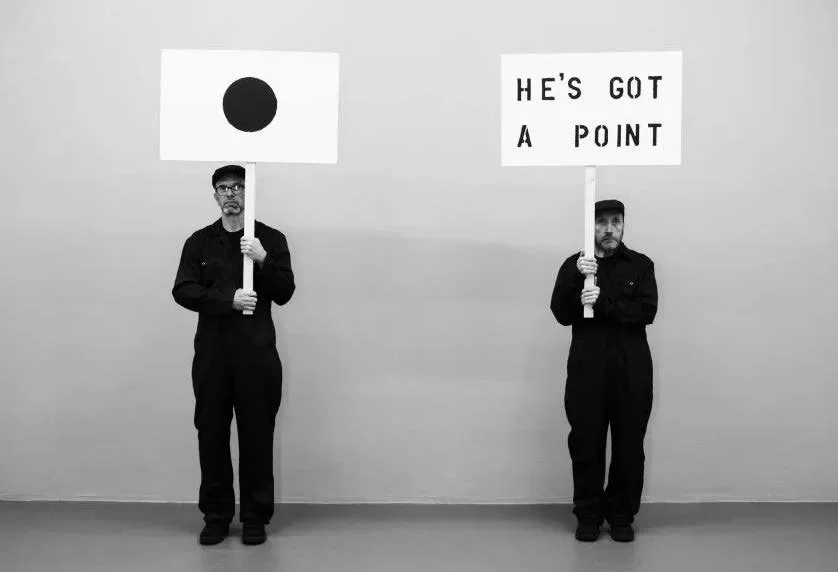
John Wood & Paul Harrison Demo Tape 2020
IMAGINATION BOOSTERS
Take Action Now
Embrace Imperfection
Our culture is geared towards perfectionism (reflected in everything from cosmetic surgery to digital optimisation). But perfectionism tries to guarantee a good outcome, whereas imagination tolerates the possibility of a bad one. In business, perfectionism removes the “what if” and demands the idea justifies itself immediately. But if every possibility has to be perfect from the beginning, very few possibilities get created at all. Build in non-judgemental time to develop ideas. Learn to trust the process when something doesn’t work immediately. And explore a visual language that celebrates imperfection. People are beginning to mistrust anything that looks or sounds “too perfect”. Welcome the post-perfection era.
“Flaws are human, and the attraction of
art is the humanity held in it.”Rick Rubin, Record Producer
Introduce Friction
We’ve spent the last decade optimising out friction – removing any difficulty, effort or inconvenience from our daily lives. We no longer need to read a map, cook a meal, or talk to people. But this daily smoothness has left us dissatisfied and, critically, unable to access a state of flow which requires a degree of difficulty and challenge. As defined by Mihali Csikszentmihalyi, flow is characterised by the state where concentration deepens, time disappears and we become absorbed in what we’re doing. This is precisely imagination’s post code.
Create Offline
Create offline, publish online. Artists such as Mitski and Billie Eilish famously remove themselves from social media and digital distraction in order to create. This allows imagination to flourish and ideas to form without being quashed by comparison, metrics or public reaction before they are ready. Author Austin Kleon recommends creating two distinct workspaces – the analog desk for creation, and the digital desk for publishing.
Introduce Complexity
Imagination thrives on complexity, contradiction and unexpected connections. Like regenerative agriculture, healthy systems are diverse rather than monocultural. We can cultivate richer imaginations by exposing ourselves to different people, disciplines, cultures, experiences and ways of seeing. The more lenses we have, the more possibilities we can perceive.
“Working with grounded, complex metaphors that have integrity is the difference between decoration and art,
tunes and music.”Tyson Yunkaporta, Aboriginal Scholar
Return To Realism
Counterintuitively, imagination is wildest when rooted in reality. Paying close attention to the physical world—to people, places, materials, nature and lived experience—gives ideas substance and human resonance. In an age of virtual fantasy, staying attuned to the real world can be a profoundly creative act.
“The imagination loses vitality as it
ceases to adhere to what is real.”Wallace Stevens, Poet
Enter Into Dialogue
Today we broadcast ideas at scale, we monologue voice-notes, we engineer others’ experiences without meeting them. In this way, we have become accustomed to our ideas flowing outwards unchallenged. But imagination strengthens in dialogue, in action and reaction. Ideas need to be bounced off people, their velocity and power amplified in the bouncing. Instead of broadcasting ideas fully formed, put them into conversation.
Explore New Modes of Thinking
The way we think is not natural. It is shaped by culture, experience and what we are taught to notice. We can seek out radically different ways of understanding the world, including those rooted in different cultures, generations, and disciplines. Indigenous thinking for example understands interconnectedness with all things and gives a different meaning to the patterns of creation. New perspectives don’t just give us new answers—they change our reality.
Build Self Trust
Imagination asks “what if?”, not “is this correct?”. Yet we increasingly outsource judgement to metrics, and we prefer validation to truth. Developing imagination means developing the confidence to follow intuition, sit with uncertainty and pursue an idea before proving its worth. Not everything valuable can be measured—and not everything measurable is valuable.
De-commodify
Today, everything is available with a Buy-Now button: luxury, knowledge, relationships. Ordinary people are ‘personal brands’. But in commodifying these things, we have stripped them of value and meaning. They no longer seem worth the effort. Imagination flourishes when we instil intrinsic value, curiosity and reverence—creating and experiencing things because they matter, not because they can be bought and sold.
Stop Iterating
Championed in the tech industry and adopted by the rest of us, iteration is the act of repeating a process, usually to improve a plan, product, or idea. It implies safety (no giant leaps) and speed (get it out there and improve it later). But iteration is not fit for purpose as an approach to imagination where your starting point decides your originality.
“Your references decide your originality.
If you’re designing a bathroom, don’t reference other bathrooms.”Kelly Wearstler, Interior Designer
Tool Up
Though much of this manifesto looks to technology with scepticism, dastardly AI could in fact become one of the most powerful tools for extending human imagination. Technological literacy means understanding both what these systems can do and where they can distort, constrain or replace our thinking. The opportunity isn’t to choose between technology and humanity, but to use technology deliberately while strengthening our full range of human capacities. After all, your device is not just a machine built to perform digital functions. It might also be…
“… rare earth metal circuitry
conducting Spirit in real time.”Tyson Yunkaporta, Aboriginal Scholar
REFERENCES
The following references have informed the ideas behind the Imagination Manifesto:
Sell Up, Not Out, Ana Andjelic, Sociology Of Business Substack Essay
The Extreme Self, Shumon Basar, Douglas Coupland, Hans Ulrich Obrist
Ways Of Seeing, John Berger
You’re Not The Only One Who’s Bored, Sy Boles, Harvard Gazette
Ocean Earth’s Last Wilderness, Colin Butfield
Britain’s Place In The New World Order, Yvette Cooper, Chatham House Essay,
Ravenous, Henry Dimbleby
Why Culture Has Come To A Standstill, Jason Farago, New York Times
On Remaining Human In The Age Of AI: Applied Imagination, Rita J. King, Medium Essay
The Psychology Of Money, Morgan Housel
Brand Dead, Sean Monahan 8Ball Report
Supremacy, Parmy Olson
The Creative Act, Rick Rubin
Manifesto on the Future of Food, Aurora Solá
Ultra Processed People, Chris van Tulleken
Keep Holding On, Jeanette Winterson Substack Essay
Sand Talk: How Indiginous Thinking Can Save The World, Tyson Yunkaporta
